Best Massage Table Accessories: Complete Buyer’s Guide
Updated: September 7, 2026
Table of Contents
The right massage table accessories can make a basic treatment setup more comfortable, versatile, sanitary, and easier to use. Some—such as sheets and face-rest covers—belong in nearly every treatment room. Others solve specific problems: a bolster improves positioning, an arm shelf gives a prone client a natural place to rest their arms, and a table cart takes the strain out of mobile work.
The Massage Tables Now massage table accessories buyer’s guide explains which products are most useful, how to use them, when they are needed, and what to check before purchasing. Use it to build a new setup, replace a worn accessory, or decide which upgrades will make the biggest difference in your practice.
THE SHORT ANSWER: Start with fresh linens, face-rest covers, a supportive face cradle, and at least one versatile bolster. Add an arm shelf, warmer, table cover, extensions, transport equipment, or specialty positioning tools when they solve a recurring need in your treatments or workflow.
HOW TO USE THIS GUIDE: Begin with the comparison chart for a quick overview. Then use the sections below to understand the fit, purpose, cleaning, and safety, and to determine which accessories deserve priority for your type of practice.
1. Massage Table Accessories at a Glance
| Accessory | What It Does | Who Needs It Most | Check Before Buying |
|---|---|---|---|
| Face cradle and pillow | Supports the head during prone treatment and helps maintain comfortable alignment | Nearly every table-based practice | Outlet spacing, dowel size, adjustment range, and table compatibility |
| Armshelf or armrest | Supports the arms and shoulders instead of letting them hang | Long prone sessions and narrow tables | Attachment method and face-cradle compatibility |
| Length or width extension | Adds usable support for taller or broader clients | Practices serving varied body sizes | Exact table model, outlets, dimensions, and rated use |
| Bolster or positioning cushion | Supports knees, ankles, neck, abdomen, shoulders, or other areas | Every practice, especially prenatal, clinical, and mobility-sensitive work | Shape, height, firmness, upholstery, and intended position |
| Linens and face-rest covers | Create a fresh client-contact layer and improve comfort | Every professional practice | Table size, pocket depth, fabric, laundering, and inventory quantity |
| Protective or fleece cover | Protects upholstery or adds cushioning and warmth | High-volume rooms and comfort-focused services | Table shape, corners, articulation, and cleaning method |
| Table warmer | Provides controlled surface warmth beneath the client | Spas, relaxation practices, and cool treatment rooms | Safety certification, timer, heat controls, dimensions, and manufacturer instructions |
| Carry case or table cart | Protects and transports a portable table | Mobile therapists, students, and event teams | Folded table dimensions, handle placement, pockets, wheel size, and terrain |
| Specialty tool | Supports a specific modality, positioning method, or treatment goal | Practitioners trained in the relevant technique | Training, contraindications, cleaning, and compatibility |
2. How to Prioritize Your Purchases
It is easy to treat massage table accessories as a wish list, but the best purchases solve a real problem. Before adding anything to your setup, ask what it will improve: client positioning, therapist access, temperature, hygiene, portability, or the range of services you can provide.
Start with the essentials
A professional table setup typically includes a compatible face cradle and pillow, enough sheet sets and face-rest covers for your daily schedule, and a versatile bolster. These items affect almost every appointment.
Add comfort where clients notice it
If clients frequently reposition their arms, complain of sinus pressure, feel cold, or need extra support beneath the knees or ankles, the solution may be an armshelf, an upgraded face pillow, a warmer, or a different bolster—not a new table.
Protect the therapist’s body and time
Mobile therapists should consider the total transport system, including the table, case, supplies, stairs, parking distance, and terrain. A reinforced carry case or table cart may provide more day-to-day value than a comfort upgrade that is used only occasionally.
Buy specialty items for services you actually provide
Pregnancy cushions, stabilization straps, sacral blocks, stone equipment, and other specialty massage accessories can be valuable, but they should match your training, clientele, and treatment menu. A focused kit is usually more useful than a crowded storage room.
3. Face Cradles, Headrests, and Face Pillows
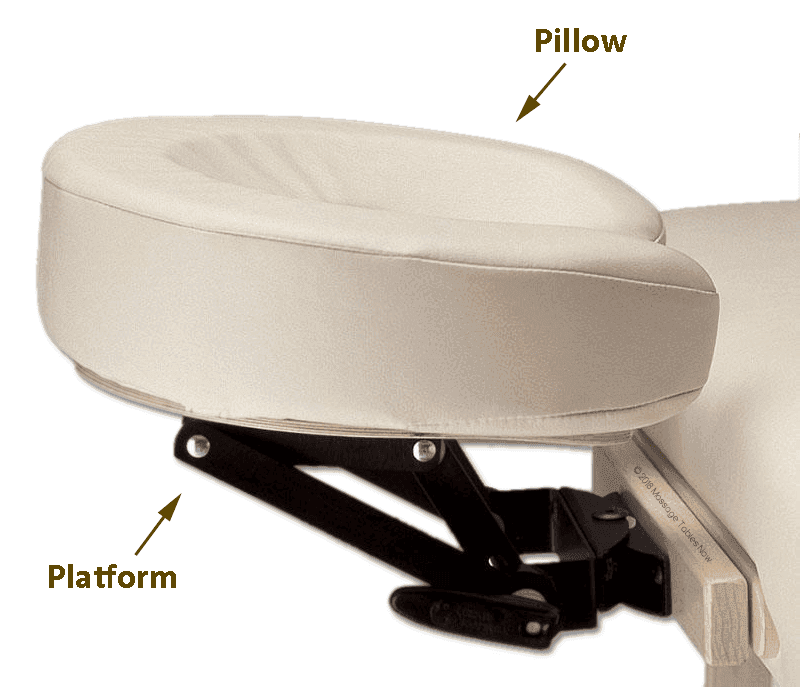
Face cradles and face pillows are among the most important massage table accessories because they directly affect client comfort and positioning during prone treatments. A massage table headrest usually has two parts: the face-cradle platform, which attaches to the table, and the face pillow, which rests on the platform and contacts the client. Together, they support the head while the client is prone and give the therapist better access to the neck, shoulders, and upper back.
Why the face cradle matters
A well-adjusted face cradle helps keep the neck in a comfortable position without concentrating pressure around the eyes, cheeks, jaw, or sinuses. The best position varies by client, so an adjustable platform is especially useful in practices serving many body types.
Common platform types
- Basic adjustable platforms change angle and height, and are suitable for general massage.
- Flexible or self-adjusting platforms respond to the client’s weight and may reduce pressure points.
- Extended-range or specialty platforms provide more lift, pivot, or side-to-side positioning for targeted neck and shoulder access.
- Fixed platforms are simple and economical but offer less individualized positioning.
Face-pillow choices
Traditional foam pillows provide straightforward support. Memory foam and layered cushioning conform more closely to the face and may feel more comfortable during longer sessions. Pillow shape, opening size, foam resilience, and upholstery all influence how pressure is distributed.
Compatibility comes first
Do not assume every headrest fits every table. Measure the distance from the center of one face-rest outlet to the center of the other, and verify the dowel diameter if the manufacturer provides it. Many systems use outlets spaced approximately 8 or 9 inches on-center, but brand, model, and production year can affect the fit. Also, confirm that the table is designed to accept the attachment at the end where you plan to use it.
Good reasons to replace or upgrade: the platform slips, adjustment locks no longer hold, dowels are bent, the pillow has lost resilience, upholstery is damaged, or clients regularly report facial pressure.
4. Armrests, Armshelves, and Table Extensions
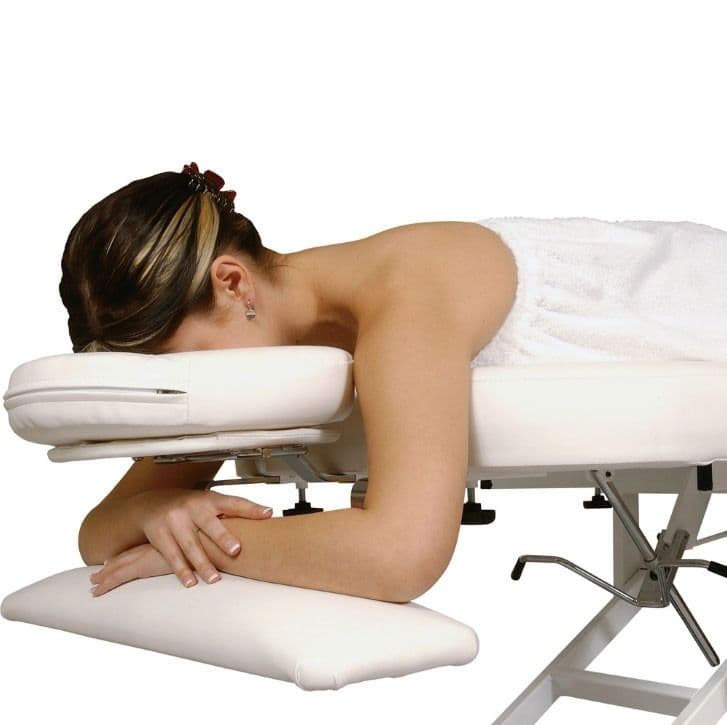
When a prone client’s arms hang beside a narrow table, the shoulders may remain tense instead of settling naturally. An armshelf attaches beneath or near the face cradle and supports the forearms in front of the table. Side armrests or width extensions support the arms alongside the body, increasing the usable surface area.
Armshelf vs. side armrest
- Front armshelf: Useful for prone work and often easy to remove. It allows the arms to rest below the face cradle and may help the shoulders relax.
- Hanging armrest: Suspends from the table or headrest assembly and can be a flexible choice for portable setups.
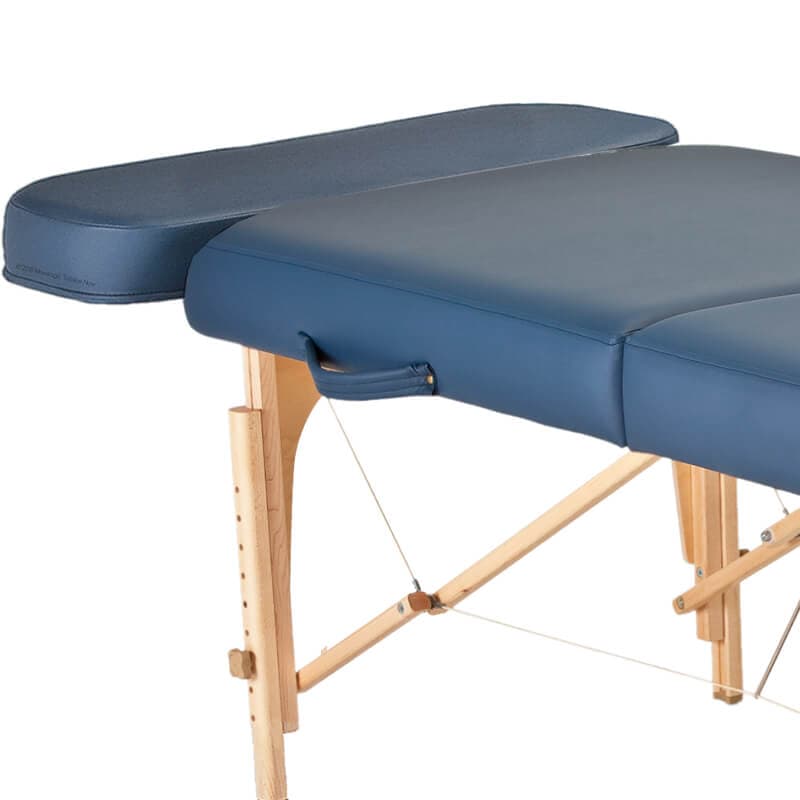
- Side armrest or width extension: Adds support beside the torso. It can help broader clients feel more secure and keep their arms from slipping off the table.
Length extensions
A footrest or table extender adds support at the end of the table for taller clients. It can also provide more room for certain positioning needs. Verify that the extension is approved for your table and understand whether it is intended to support feet and lower legs rather than substantial seated or transfer weight.
When these accessories are most useful: your table is intentionally narrow for therapist body mechanics, you serve taller or broader clients, prone sessions are long, or unsupported arms repeatedly interfere with relaxation.
5. Bolsters and Positioning Supports
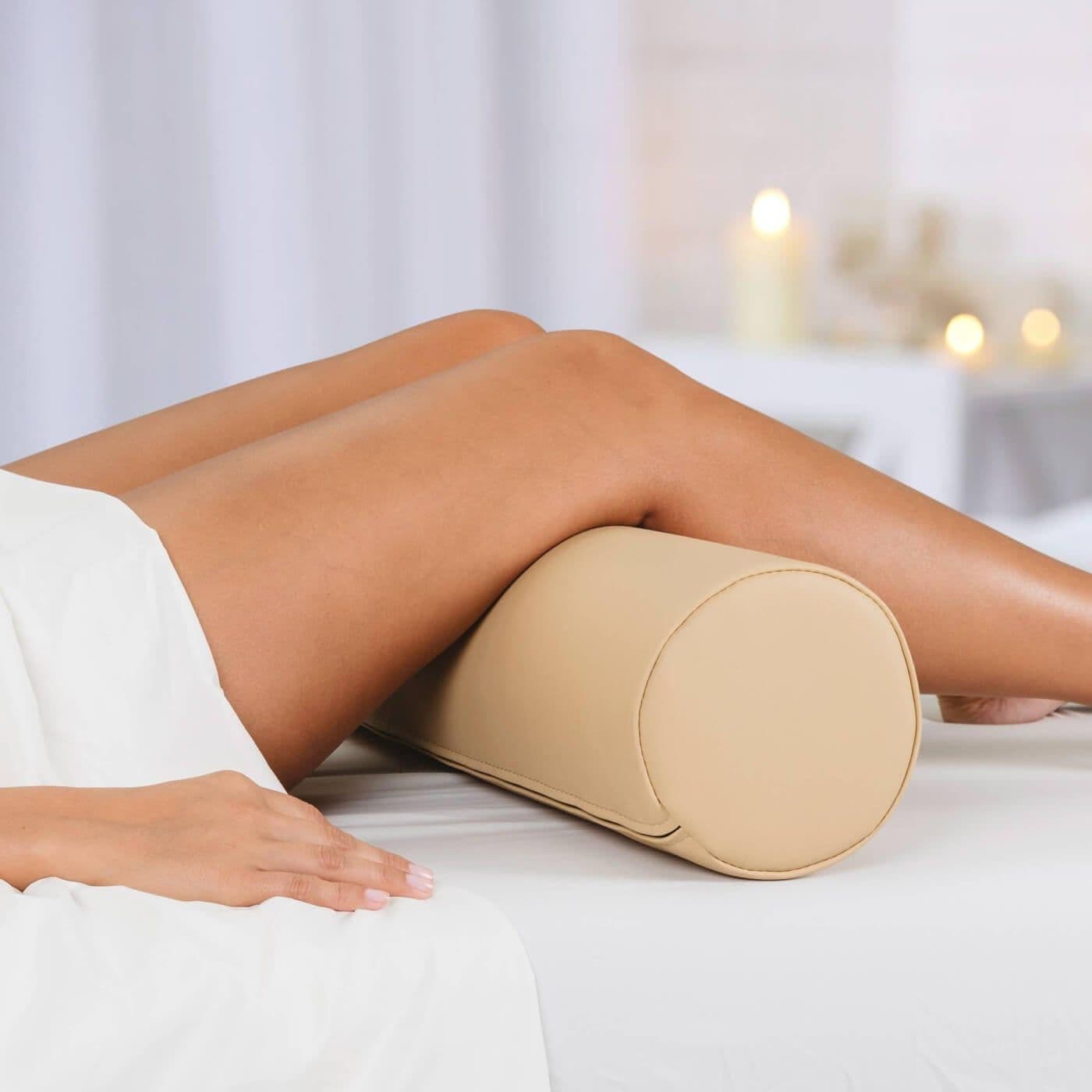
Among all massage table accessories, bolsters are some of the most versatile. They elevate and support a body area so the client can rest more comfortably and the therapist can work from a better position. A single session may use different supports as the client moves from supine to prone or side-lying.
How bolsters are commonly used
- Under the knees in a supine position: Allows slight hip and knee flexion and can reduce tension through the lower back.
- Under the ankles in a prone position: Supports the lower legs and reduces pressure on the feet and ankles.
- Under the neck: Fills the space beneath the cervical curve when a smaller support is appropriate.
- For side-lying work: Supports the upper leg, arms, abdomen, or back to help maintain a stable position.
- For prenatal or post-procedure comfort: Provides customized support where appropriate to the client’s needs and the practitioner’s training.
Which bolster shape should you choose?
| Image | Shape | Feel and Stability | Common Uses |
|---|---|---|---|
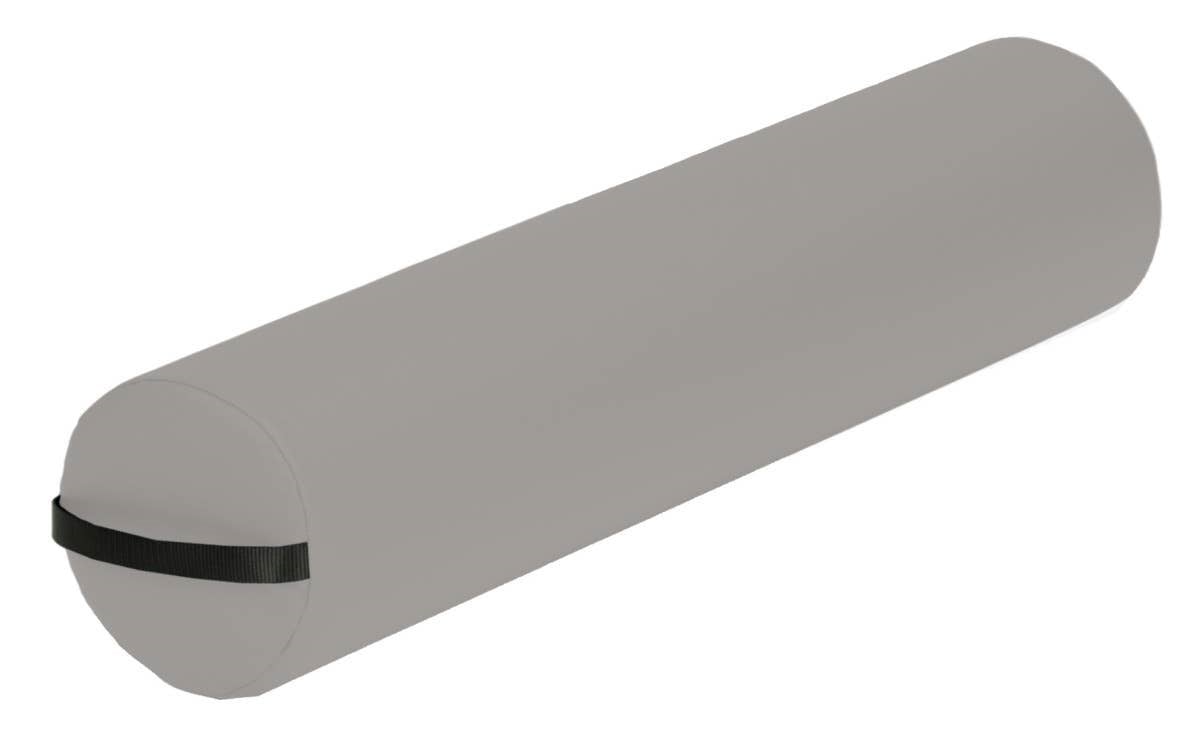
|
Full round | Higher lift; easy to reposition; may roll if not stabilized | Knees, ankles, and larger elevation needs |

|
Half round | Lower profile with a flat, stable base | Ankles, neck, knees, and subtle support |
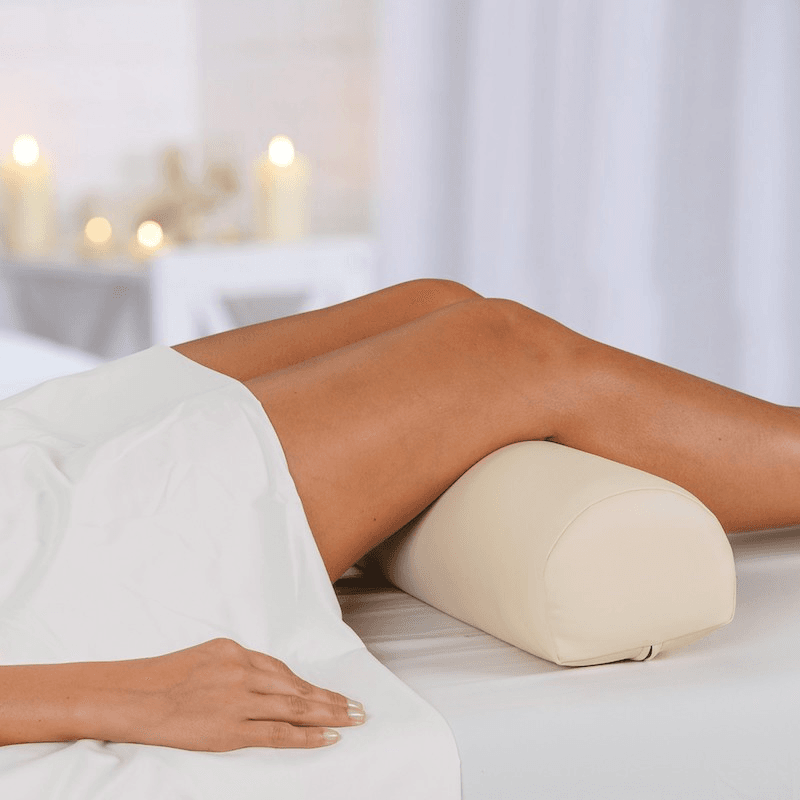
|
Three-quarter round | More height than a half round with improved stability over a full round | Knees, ankles, and consistent positioning |
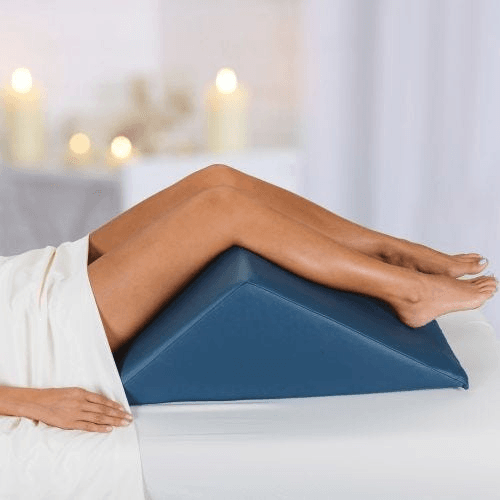
|
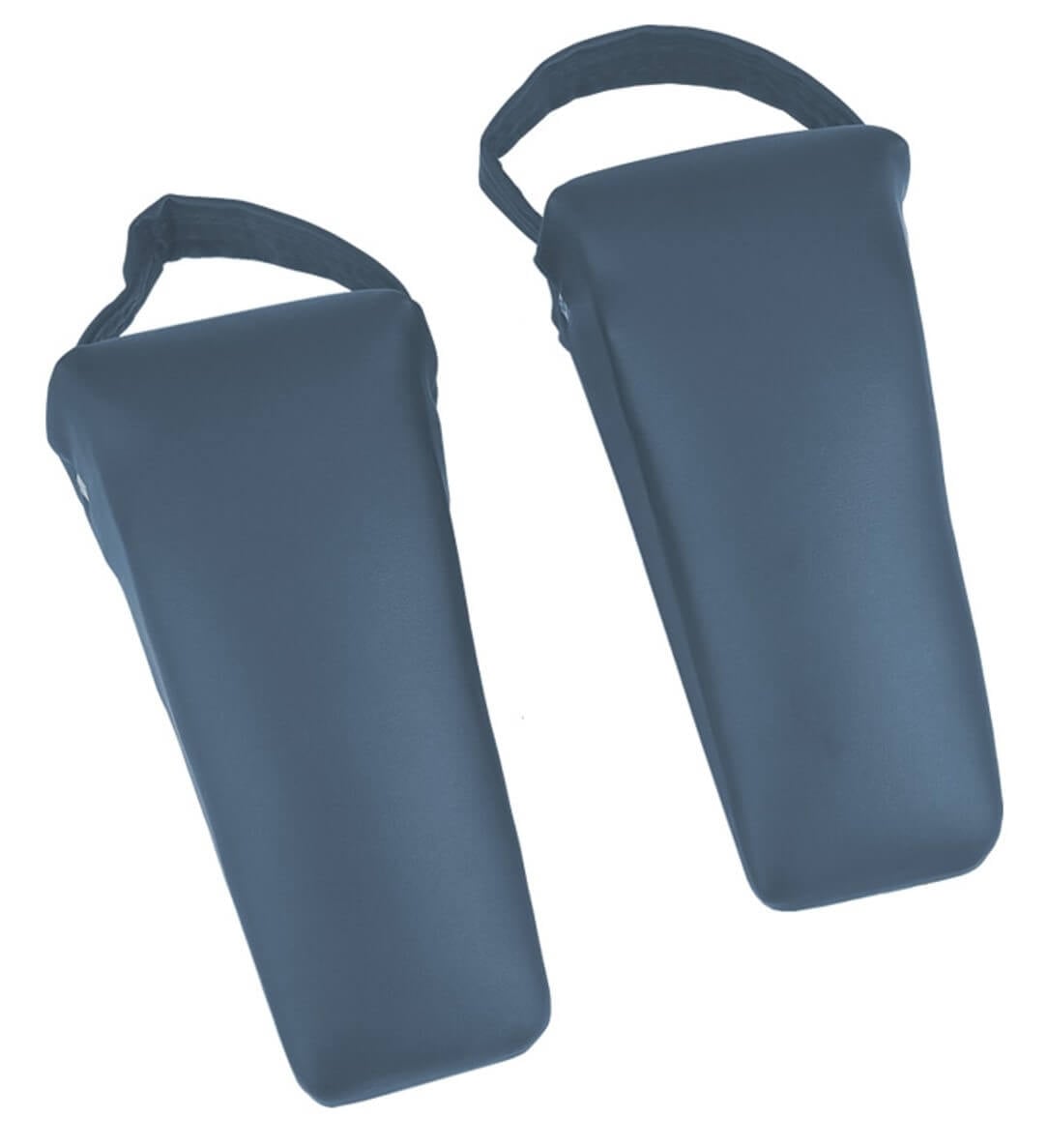
Wedge | Gradual incline and broad support surface | Torso, legs, seated positioning, and modality-specific support |
|
Specialty cushion or block | Designed for a particular body area or positioning method | Pregnancy, prone support, cervical work, sacral positioning, and clinical techniques |
What to look for
Choose a height and firmness that support the intended position without forcing it. Commercial-grade foam should recover its shape, while durable upholstery should tolerate the cleaning products approved by its manufacturer. Handles make frequent repositioning easier, and a flat base can be helpful when the support must stay in place.
If you are buying your first bolster, a full-round or three-quarter-round is a practical, general-purpose choice. Add a smaller half-round, wedge, or specialty cushion when a recurring client or modality need makes its purpose clear.
6. Sheets, Face-Rest Covers, and Table Covers
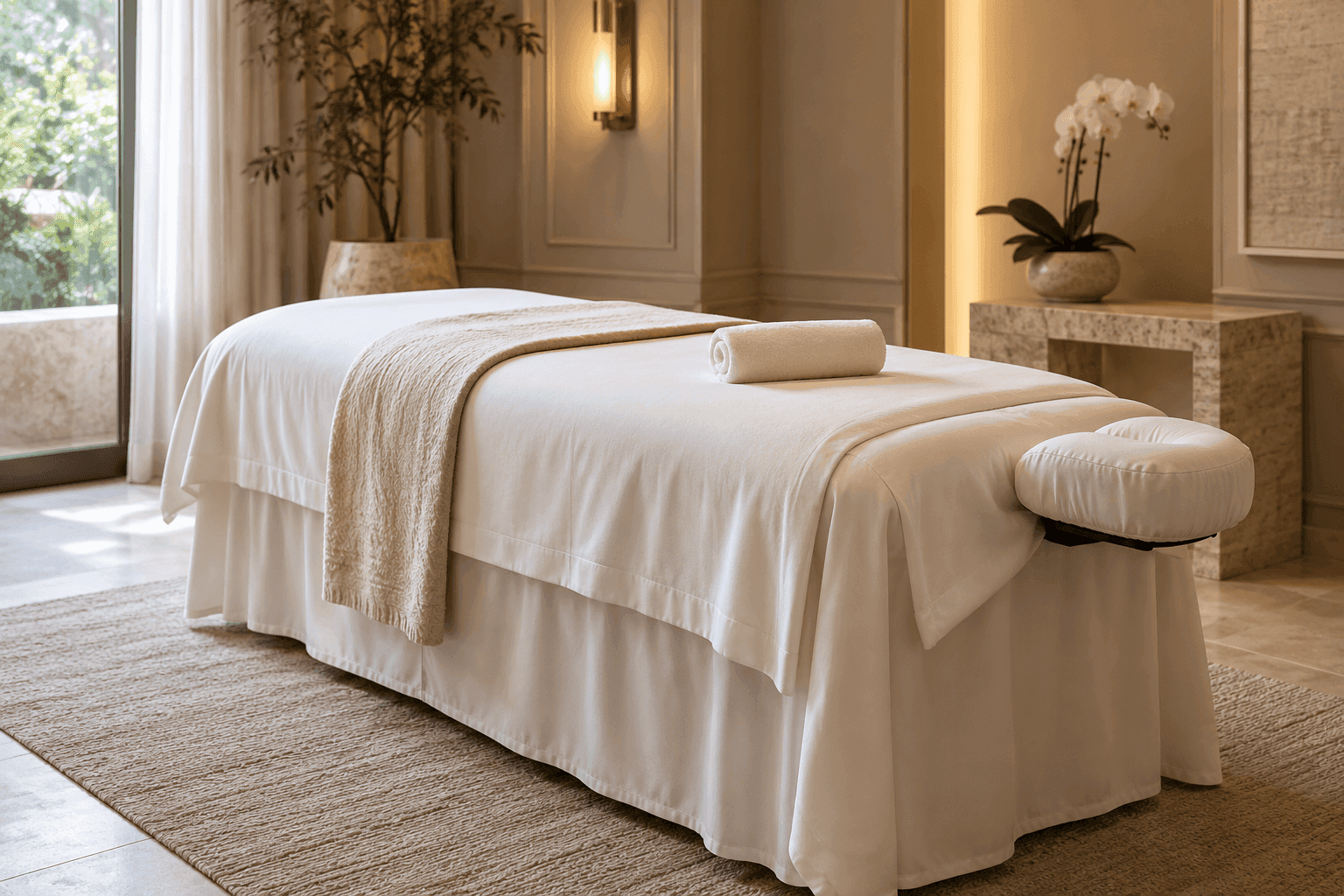
Linens, face-rest covers, and protective covers are essential massage table accessories for maintaining a clean, comfortable, and professional treatment surface. They support professional draping and make the table feel more welcoming. Protective covers help preserve the table’s upholstery, while fleece pads add softness and insulation. These products perform different jobs, so one should not automatically replace another.
Massage table sheets
A typical sheet set includes a fitted sheet, a flat top sheet, and a face pillow cover. Check the table’s length, width, and cushion depth against the fitted sheet dimensions. A deep-pocket sheet may be necessary when the table has thick padding, a fleece pad, or a warmer beneath it.
- Microfiber is soft, lightweight, wrinkle-resistant, and generally quick drying—helpful for high laundry volume and mobile work.
- Flannel feels warm and cozy, making it popular for relaxation massage and cooler rooms, but it is bulkier to store and may take longer to dry.
- Cotton or cotton blends offer a familiar feel; exact softness, weight, shrinkage, and drying time depend on the fabric construction.
Reusable and disposable face-rest covers
Reusable covers coordinate with sheet sets and are laundered between clients. Disposable fitted or flat covers are useful for events, mobile appointments, quick room turnover, or as an additional fresh contact layer. They do not eliminate the need to clean the face pillow according to its manufacturer’s instructions.
Protective table covers
A fitted protective cover can shield the original upholstery, refresh the appearance of an older table, or provide a surface designed for demanding cleaning routines. Match the cover to the table’s shape and corners. A flat-table cover may not work correctly on a tilt-back or salon-top table because articulated sections need room to move.
Fleece pads and covers
Fleece adds plush cushioning and warmth without active heat. It can be used alone or with a warmer when permitted by the manufacturers. Because extra layers change the effective table depth, confirm that fitted sheets will still stay secure.
7. Massage Table Warmers and Fleece Pads
A massage table warmer provides gentle heat beneath the client, helping a cool table feel inviting from the beginning of the session. It is especially valuable in relaxation-focused practices, cold climates, air-conditioned rooms, and services where clients remain still for extended periods.
Features worth comparing
- Heat settings: Multiple settings allow you to adjust for the room, treatment, and client.
- Automatic shutoff or timer: Reduces the chance that a warmer will remain on unintentionally.
- Safety certification: Look for the certification stated on the product and follow the listed operating instructions.
- Secure fit: Elastic corner straps help prevent shifting beneath the linens.
- Full-table dimensions: Confirm that the warmer fits the treatment surface without bunching or hanging where it should not.
- Cleaning instructions: Some warmers have specific spot-cleaning or laundering restrictions because of their electrical components.
Place the warmer and protective layers exactly as directed by the warmer and table manufacturers. Do not fold, sharply crease, pin, or operate a warmer when damaged. Check the client periodically, use the lowest comfortable setting, and take extra care when a client has reduced heat sensitivity, impaired circulation, difficulty communicating discomfort, or another relevant health concern. When in doubt, do not use active heat.
Fleece pad or warmer? Choose fleece when you want passive softness and insulation. Choose a warmer when controlled active heat is central to the experience. Some practices use both when the products’ instructions permit it.
8. Carrying Cases and Table Carts
For mobile therapists, transport-focused massage table accessories are essential because a portable table must be moved safely and reliably. Carry cases protect the folded table from scrapes, weather exposure, and everyday bumps. Table carts shift much of the load onto wheels and can make longer walks or heavier setups more manageable.
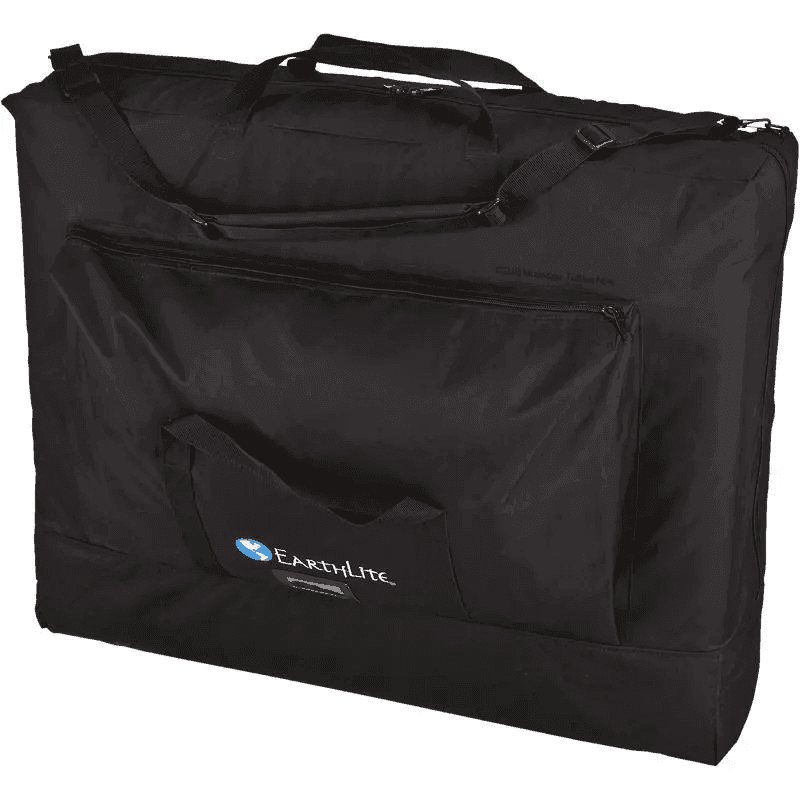
Basic vs. professional carry cases
A basic case may be all that a student, an occasional mobile therapist, or a practitioner with a light setup needs. A professional case generally adds heavier fabric, reinforced stress points, a stronger bottom, more comfortable straps, and larger or better-organized storage pockets.
Measure the table while folded, including its width, length, and thickness. A case that is too tight is frustrating to load and strains seams; one that is too loose allows the table to shift. Confirm whether exterior pockets can hold the supplies you actually carry, such as sheets, a bolster, or the face cradle.
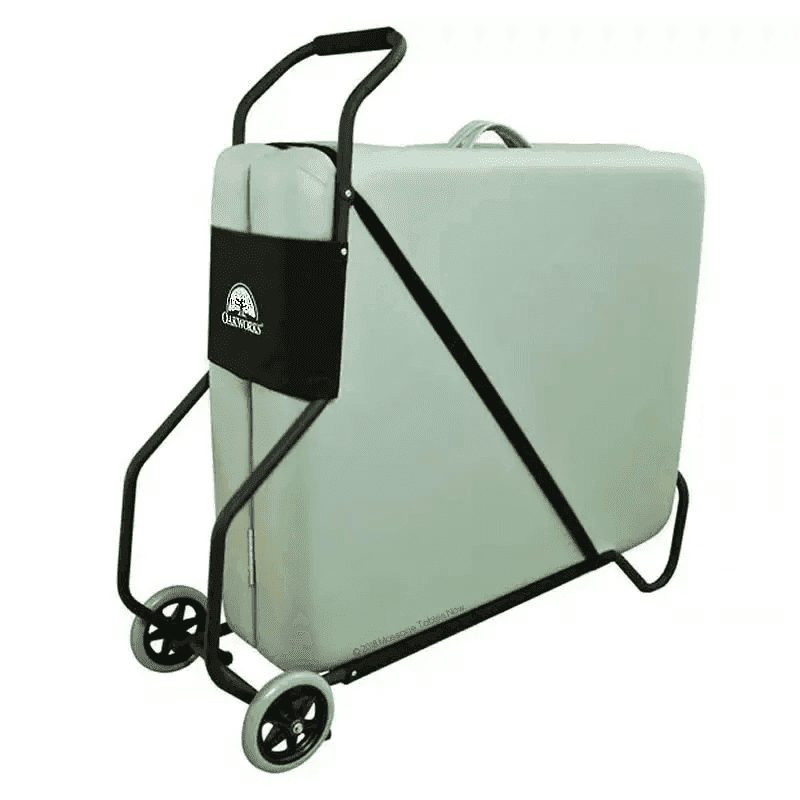
When a table cart earns its place
A cart is especially useful when parking is far from the treatment location, the table is carried several times a day, or your route includes uneven pavement. Compare wheel size, frame width, handle comfort, table restraints, folded storage size, and stair performance. A cart helps during rolling portions of the trip, but you may still need to lift the table into a vehicle or over obstacles.
9. Specialty Massage and Positioning Tools
Specialty tools can expand what a trained practitioner can do, but they are not universal essentials. Choose them because they support a defined service—not simply because they appear on a list of popular massage accessories.
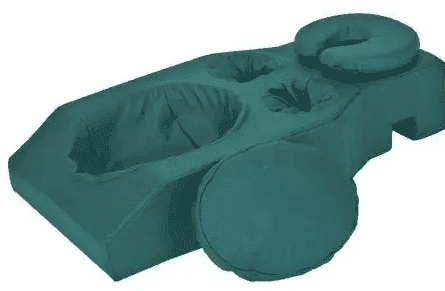
Pregnancy and prone-positioning cushions
Pregnancy and prone cushions are designed to redistribute support and create space for the abdomen or chest. They may be used for prenatal massage or to improve comfort for clients who cannot lie prone on a flat surface. Compatibility with the table, cushion sizing, client screening, and practitioner training all matter.
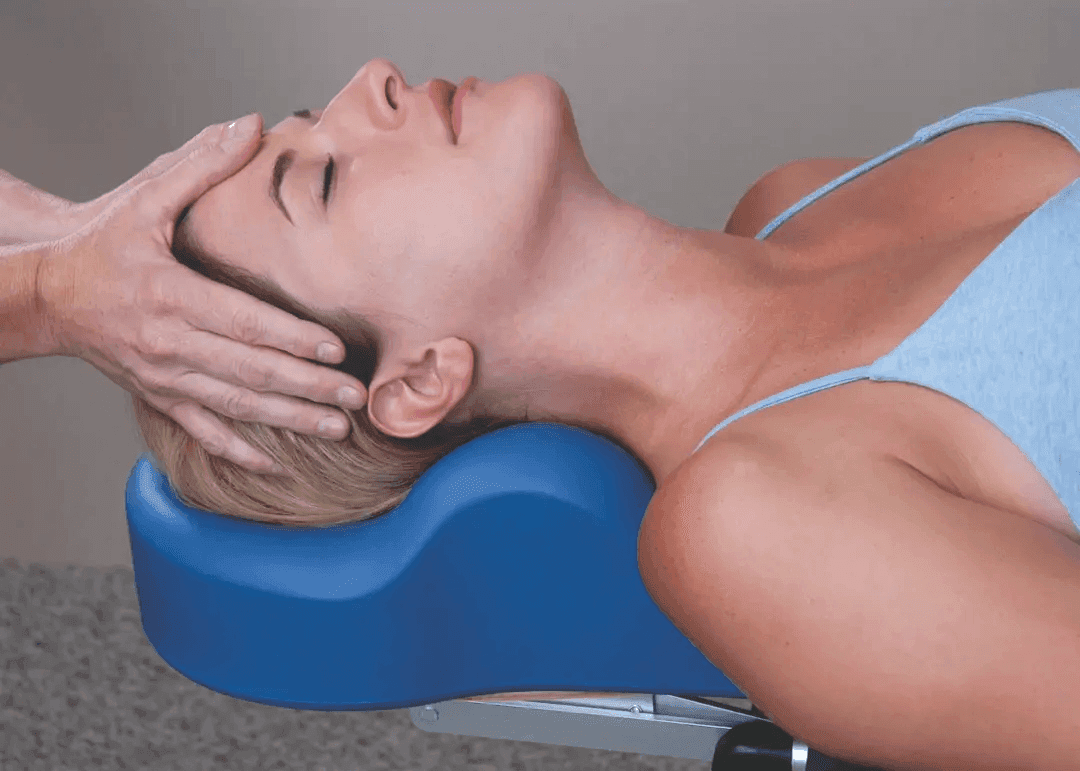
Cervical pillows and positioning blocks
Cervical support pillows, sacral blocks, wedges, and similar supports help position a specific region with more precision than a general bolster. The correct shape depends on the technique and the client—not on a one-size-fits-all rule.
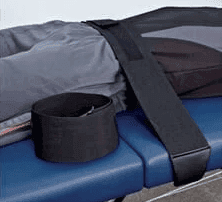
Stabilization straps
A table stabilization strap can help trained professionals with mobilization, range of motion, isolation, or assisted stretching techniques. The strap should be designed for the table, attached only at approved points, and used within the practitioner’s scope and training. It should never restrict breathing, circulation, or the client’s ability to communicate.
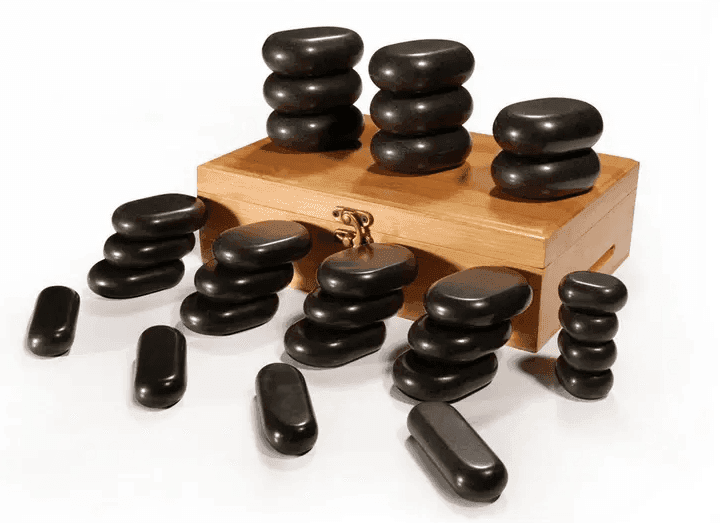
Hot-stone equipment and other modality tools
Massage stones, heaters, storage systems, and related supplies support hot-stone services. Select equipment designed for professional use, follow temperature and sanitation instructions, and screen clients for heat-related contraindications. Other tools in this category may support targeted pressure or a particular modality; use them only with appropriate education and cleaning procedures.
10. Sanitation and Accessory Care
Good accessory care protects clients, preserves equipment, and keeps the treatment room looking professional. Because upholstery, fabric, foam, plastics, and electrical products respond differently to cleaning, always begin with the manufacturer’s instructions.
- Remove used linens after every client. Keep clean and soiled items separate during storage and transport.
- Clean client-contact surfaces between appointments. Pay particular attention to the face pillow, platform touch points, armrests, bolsters, controls, and table edges.
- Use compatible cleaners and the correct contact time. A product can damage upholstery if it is too harsh, mixed incorrectly, or left on longer than directed.
- Allow surfaces to dry. Trapped moisture can affect materials and create an unpleasant setup for the next client.
- Inspect accessories regularly. Retire items with cracked upholstery, exposed foam, weakened seams, bent dowels, loose locks, frayed cords, unreliable heat controls, or other damage that prevents safe cleaning or use.
- Follow laundry directions. Fabric type, water temperature, detergent, drying method, and stain treatment all affect service life.
Disposable barriers add convenience but do not make the underlying surface self-cleaning. Likewise, a fitted table cover protects the original upholstery but must still be cleaned between clients when it is part of the contact surface.
11. Which Massage Table Accessories Fit Your Practice?
New massage therapist or student
Prioritize the items used at nearly every appointment: a reliable face-cradle system, several sheet sets, reusable or disposable face-rest covers, and one versatile bolster. If you travel with your table, add a fitted carry case before building a collection of specialty tools.
Mobile massage therapist
Weight, setup time, packing space, and durability matter most. Consider a reinforced case, a table cart, quick-drying microfiber sheets, a compact bolster, disposable face-rest covers, and accessories that attach without complicated setup. Avoid carrying “just in case” items that rarely leave the bag.
Spa or relaxation practice
Client warmth and sensory comfort take priority. A supportive face pillow, armshelf, fleece pad, table warmer, soft flannel or microfiber sheets, and coordinated bolster can make the table feel more luxurious without changing the core equipment.
Deep-tissue, sports, or assisted-stretch practice
Look for stable positioning and therapist access. Bolsters in more than one height, a secure face cradle, side arm supports, table extensions, and modality-specific straps or supports may be useful. Confirm that every attachment is compatible with the table and appropriate for the force and movement involved.
Clinical, physical therapy, or chiropractic setting
Choose durable, easy-to-clean materials and precise positioning tools. Protective table covers, wedges, half-round bolsters, cervical supports, sacral blocks, stabilization accessories, and disposable barriers may support efficient turnover and repeatable positioning. Cleaning-agent compatibility is especially important in high-frequency environments.
Prenatal and side-lying massage
A single standard bolster is rarely enough for every position. Consider pregnancy or prone cushions plus multiple bolsters or pillows to support the abdomen, upper leg, arms, head, and back. Training and individual client assessment should guide the setup.
12. Massage Table Accessory Buying Checklist
Before purchasing massage table accessories, work through these questions to confirm that each item fits your table, clients, and daily workflow:
- What problem will this accessory solve? Identify the recurring client, treatment, or workflow need.
- Does it fit my exact table? Check brand, model, dimensions, outlet spacing, dowel diameter, corner shape, and articulation.
- Is it designed for the intended load and use? A foot extension, armshelf, or attachment may not be a transfer or seated support.
- Can I clean it appropriately? Verify material, approved products, laundering, and drying instructions.
- Will it fit my workflow? Consider setup time, storage, laundry capacity, transport weight, and room layout.
- Does it match my clientele? Consider body size, positioning needs, temperature preferences, session length, and services offered.
- What is covered by the warranty? Review commercial-use limitations and the coverage for foam, upholstery, frames, locks, cords, and controls.
- Do I need multiples? Linens and covers require sufficient inventory to account for turnover, laundry delays, and a reasonable backup supply.
COMPATIBILITY TIP: Product names such as “universal” can still come with size limits or attachment requirements. When replacing a face cradle, cover, extension, or case, measure the table and check the product specifications instead of relying on appearance alone.
Build a Setup That Works Better
The best massage table accessories are not necessarily the most elaborate. They are the ones that make positioning easier, help clients settle comfortably, support clean turnover, protect your equipment, and reduce unnecessary effort in your workday.
Massage Tables Now carries professional accessories from trusted massage-equipment manufacturers, including face cradles, bolsters, armrests, extensions, linens, covers, warmers, carrying cases, carts, sanitation supplies, and specialty tools. Explore
, or contact our team at (888) 515-0444, by live chat, or at hello@massagetablesnow.com for help checking fit and choosing the right accessories for your table and practice.- What massage table accessories does a beginner need?Begin with a compatible face cradle and pillow, multiple sheet sets, face-rest covers, and a general-purpose bolster. Mobile beginners also need a correctly sized carrying case. Add other accessories after you identify which comfort or workflow problems recur.
- Are massage table headrests universal?No. Headrest outlets commonly differ in spacing and may differ in dowel diameter or attachment design. Measure center-to-center outlet spacing and confirm compatibility with both the table and face pillow before buying.
- What is the difference between a face cradle and a face pillow?The face cradle is the platform or frame that attaches to the table. The face pillow is the cushioned piece that rests on the platform and supports the client’s face. They are often sold together, but replacement components may also be available separately.
- What size massage table sheets do I need?Match the fitted sheet to the table’s width, length, and cushion depth. Include any fleece pad, topper, or warmer when estimating the required pocket depth. The flat sheet should provide enough coverage for your draping method.
- How many sheet sets should a massage therapist own?There is no single number for every practice. Keep at least enough clean sets for the busiest day between laundry cycles, then add a buffer for stains, late cancellations that disrupt laundry plans, and unexpected appointments.
- Which bolster shape is most versatile?A full-round or three-quarter-round bolster is a strong first choice for supporting knees and ankles. A half-round offers a lower, more stable profile. The most versatile option is the one that matches the positions and clients you treat most often.
- Can I use a regular heating pad as a massage table warmer?Use a product specifically designed and instructed for warming a massage table. A purpose-built table warmer provides coverage, attachment, controls, and operating directions for that application. Always follow the warmer and table manufacturers’ safety instructions.
- Do disposable face-rest covers replace cleaning?No. They provide a fresh barrier but do not replace cleaning and caring for the face pillow and nearby touch surfaces between clients according to the manufacturer’s directions.
- Is a table cart better than a carrying case?They solve different problems. A case protects the table and provides handles or straps; a cart reduces the need to carry over rollable surfaces. Busy mobile therapists often benefit from both.
- Can I add accessories from one brand to another brand’s table?Sometimes, but only when the dimensions and attachment system are compatible. Confirm specifications with the product listing or ask for help using your table’s brand, model, measurements, and photos of the attachment points.